Where the Tile Becomes Itself
Where We Work
In the medina of Fez, Morocco — the oldest living city in the Arab world. Our family has operated this atelier since 1960, producing zellige, bejmat, tomettes, and kermoud for architectural projects across Morocco and beyond.
Our tiles have contributed to the restoration of the Mausoleum of Moulay Idriss II, the Karaouiyne Mosque and University, and the Medersa Ben Youssef in Marrakech.
The Making
-
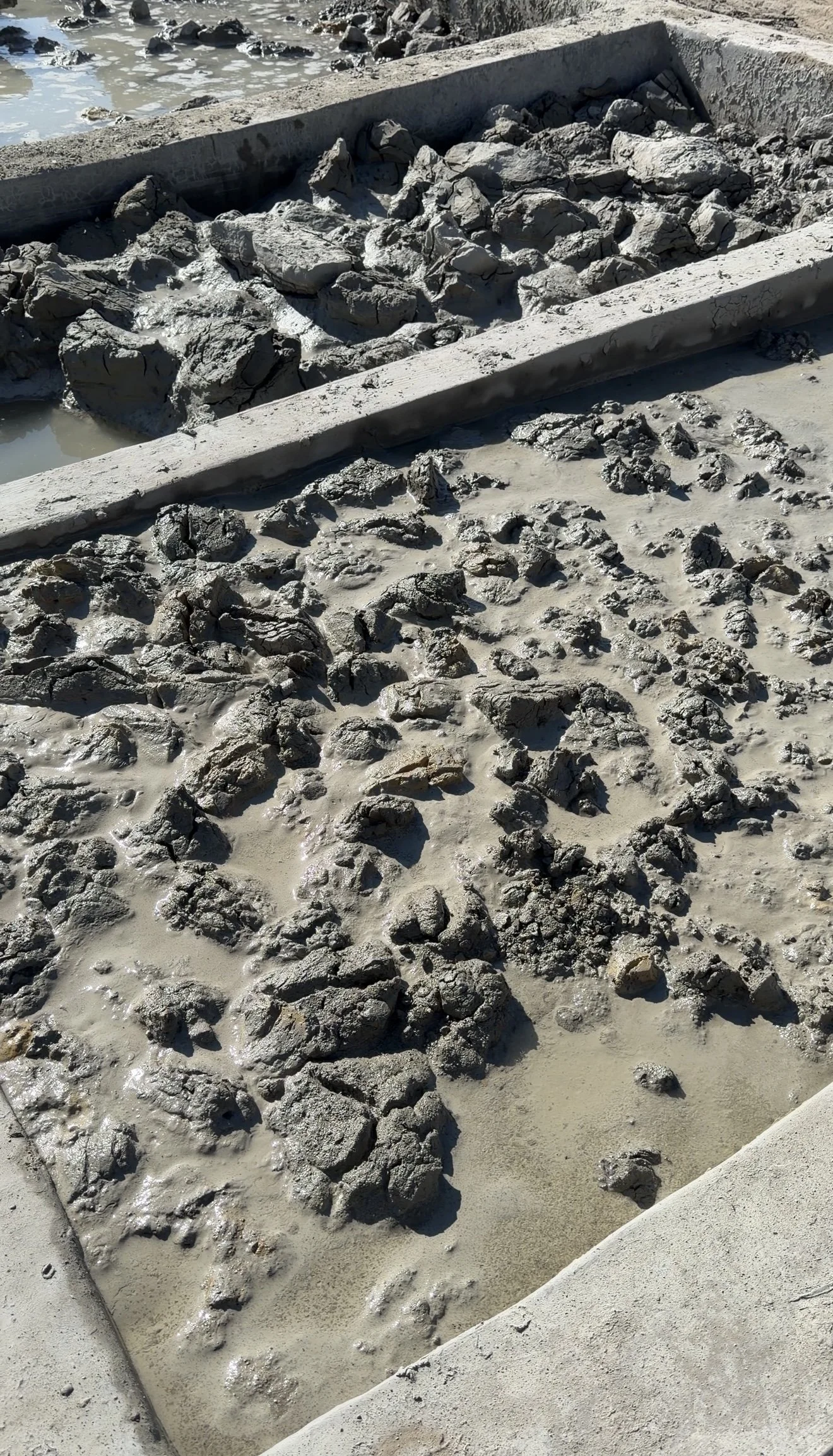
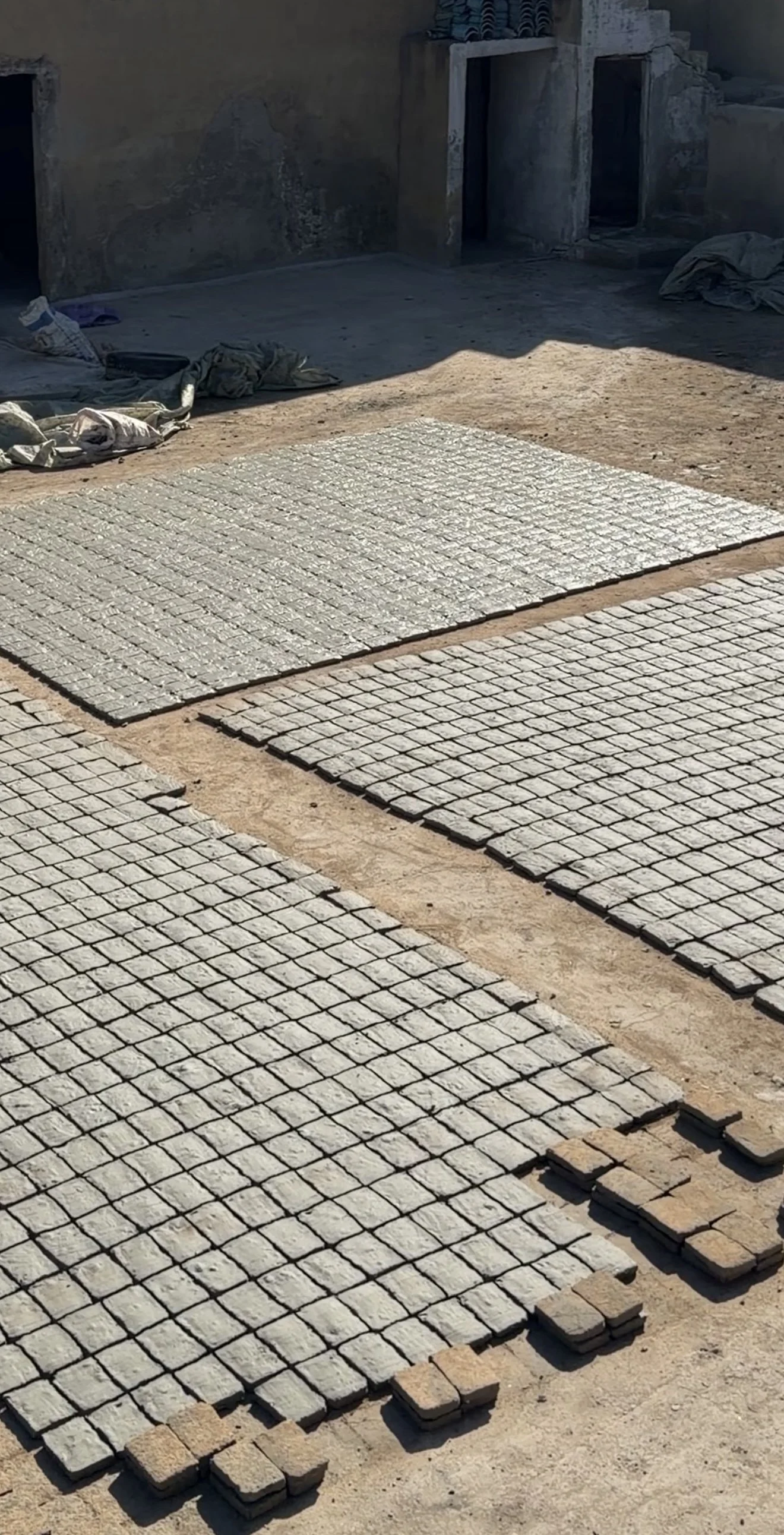
![Raw clay soaking in water, first step of handmade tile production in Fez]()
The Clay
-
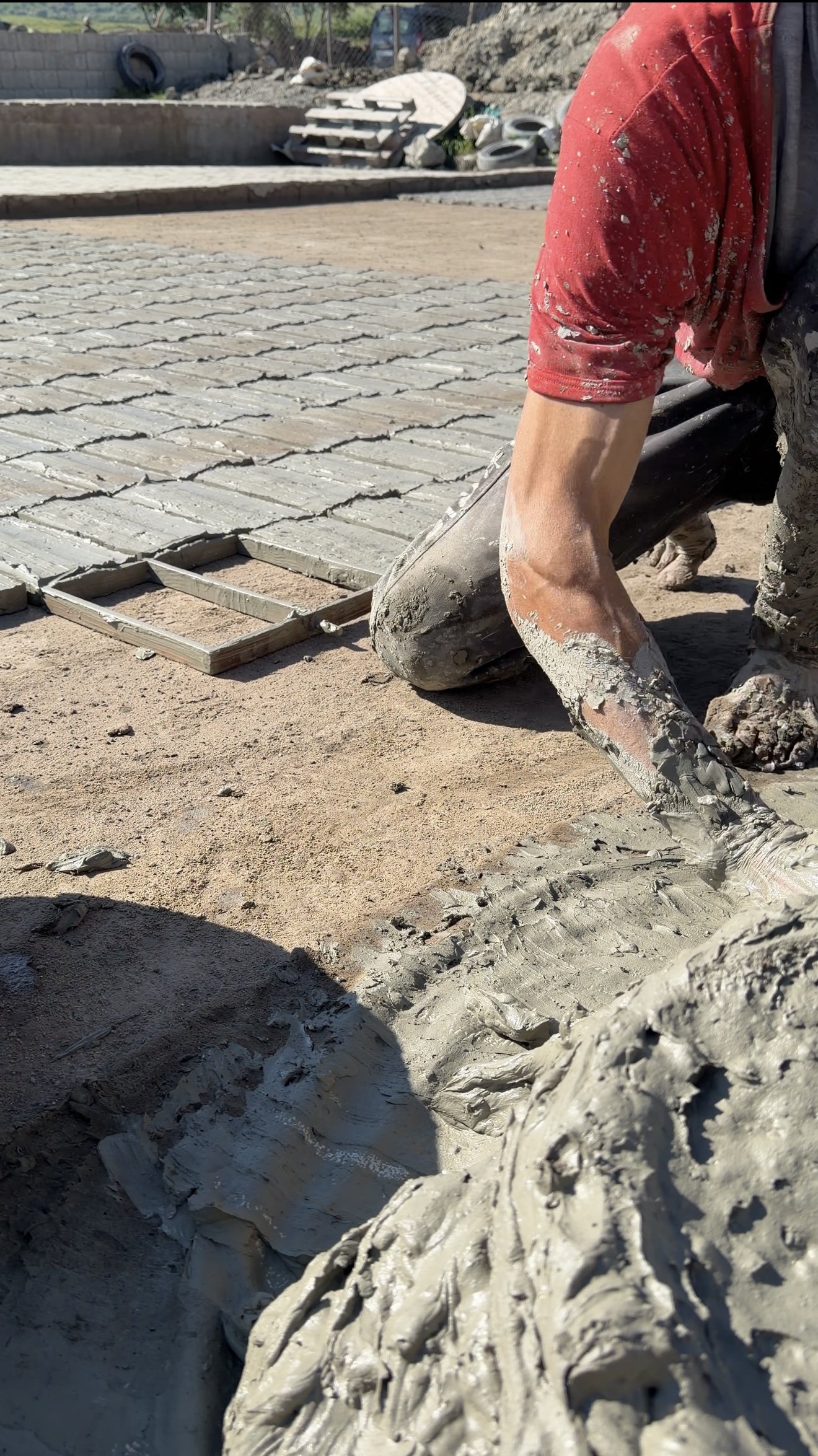
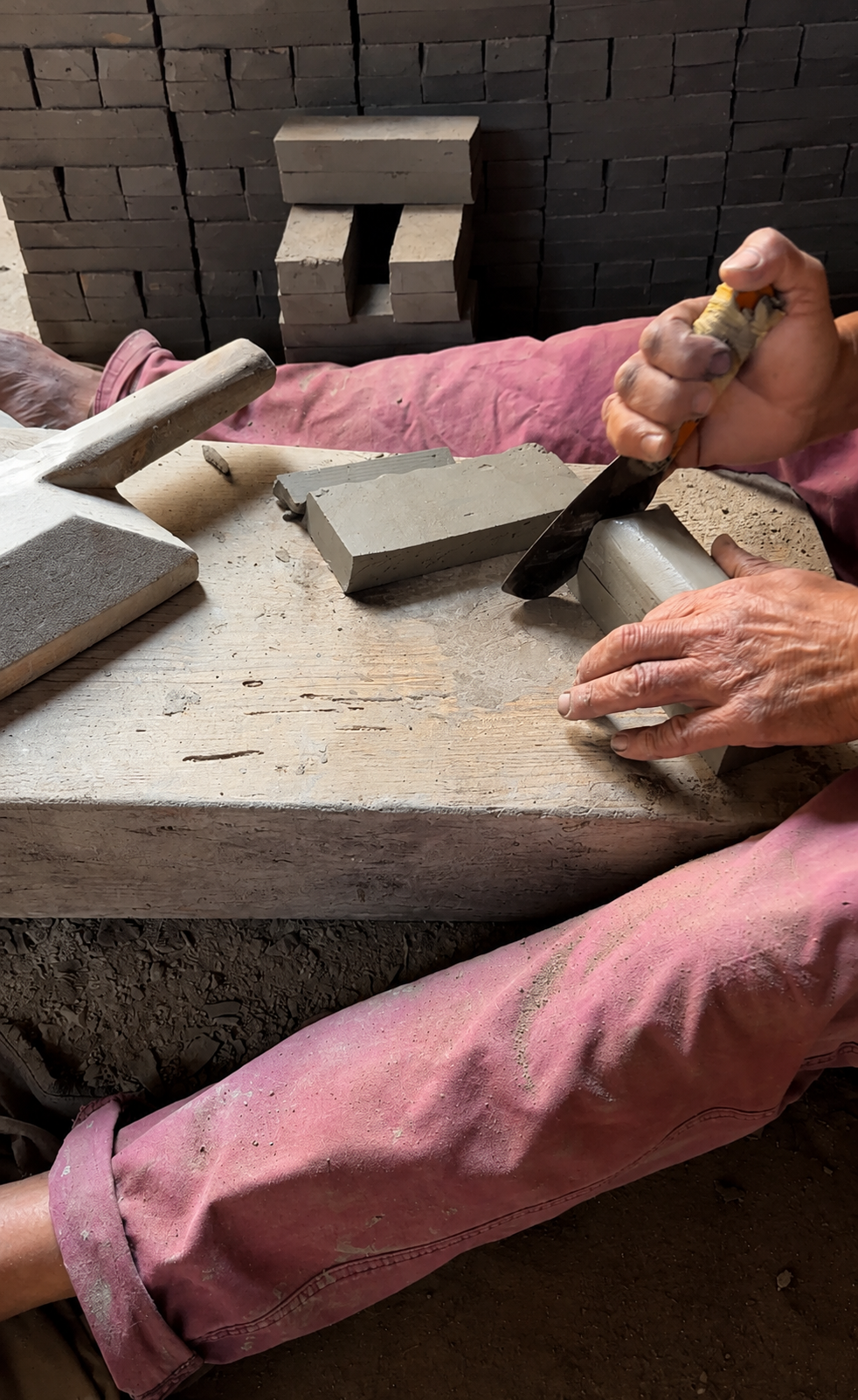
![Artisan shaping wet clay into rectangular tiles to dry in a Fez workshop]()
The Forming
-
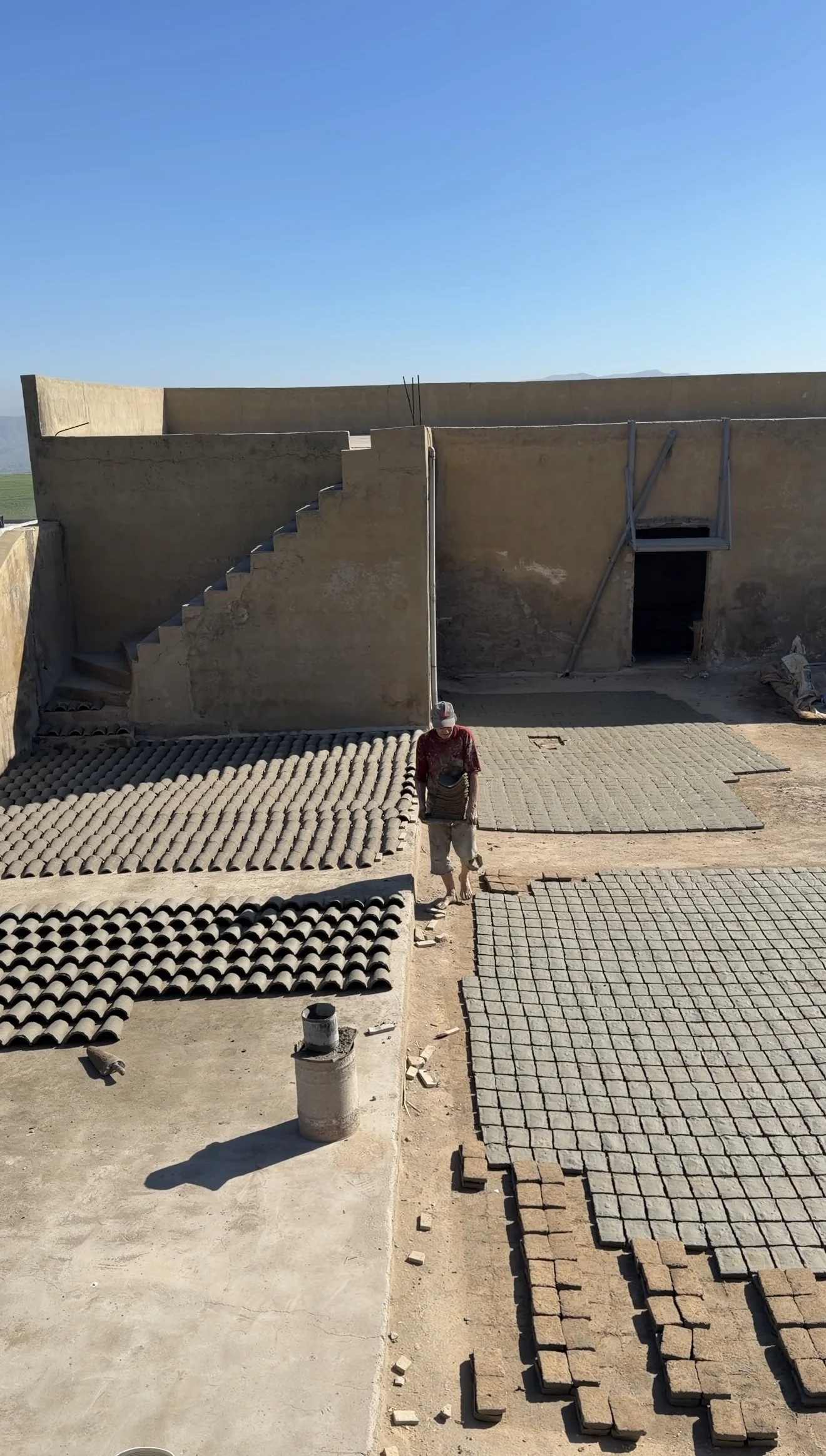
![Handmade clay tiles drying in the workshop before firing, Fez, Morocco]()
The Drying
-
![Artisan hand-shaping clay tiles in a Fez workshop]()
The shaping
-
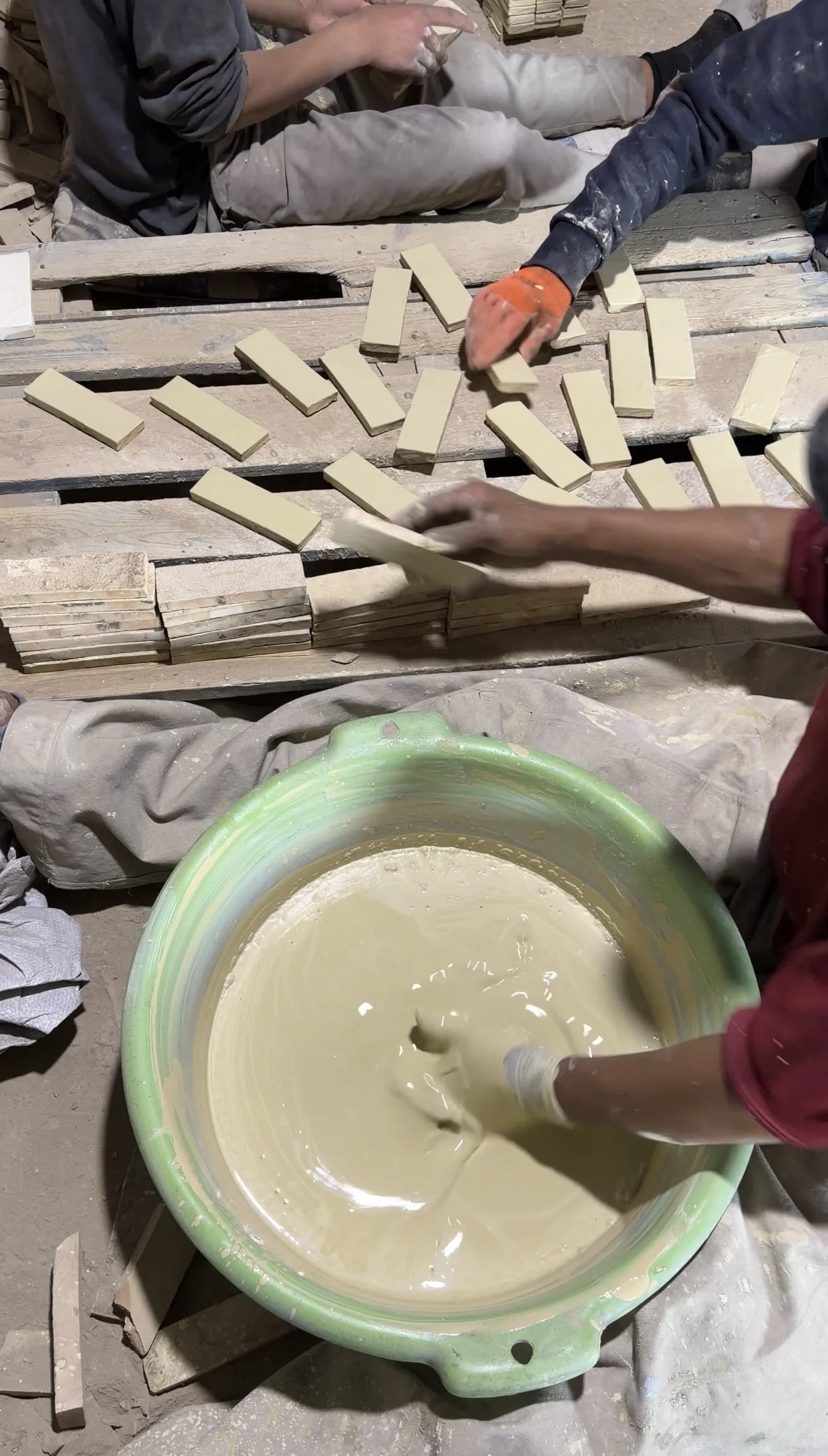
![Artisans glazing handmade ceramic tiles in Fez, Morocco]()
The Glazing
-
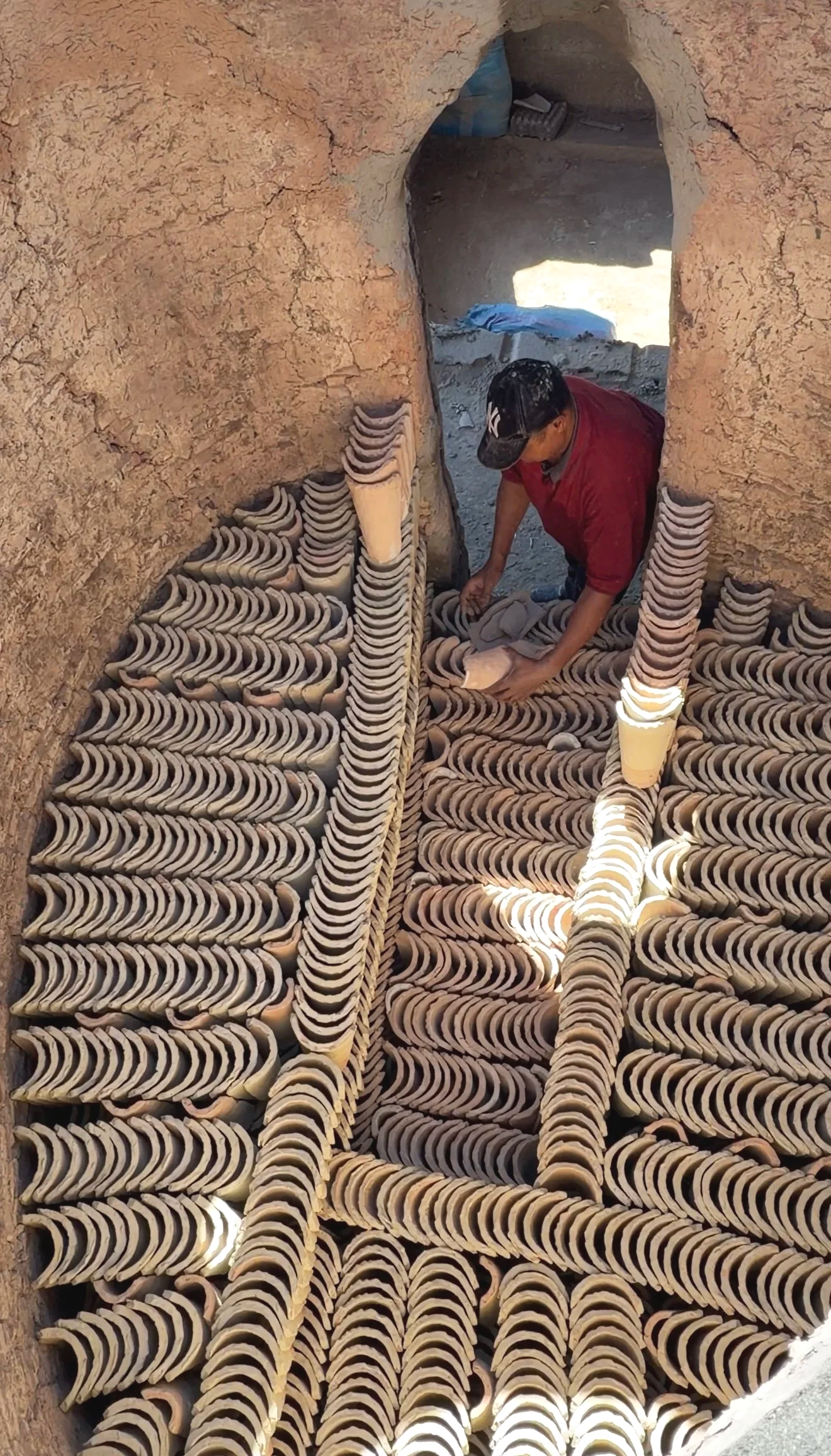
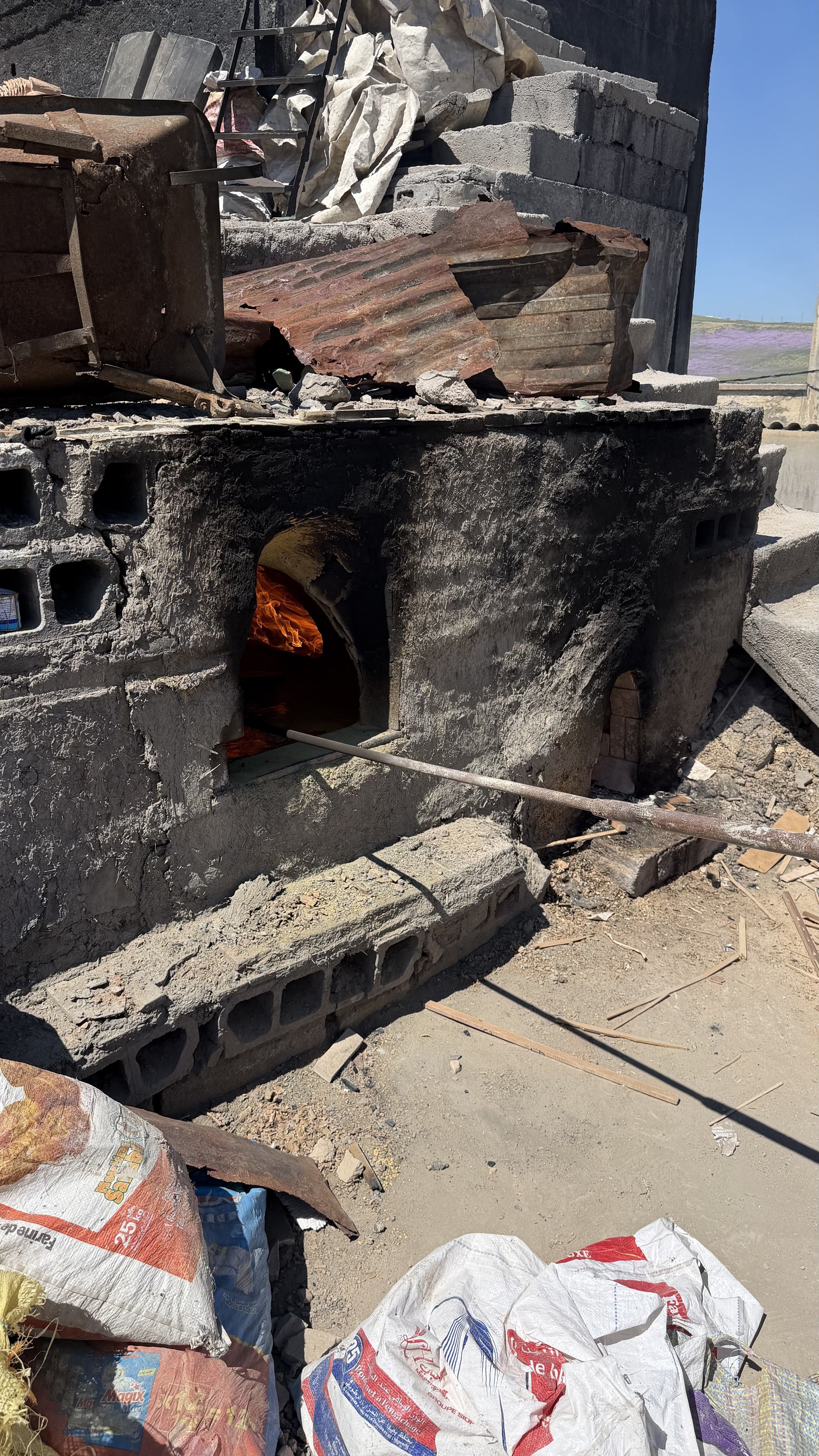
![Traditional wood-fired kiln firing handmade tiles in Fez]()
The Firing
What hasn't changed
Industrial tile is pressed, printed, and fired by the thousand in a few hours. Ours is not.
Every bejmat and zellige still passes through the same hands it did in 1960. The clay is dug, kneaded, and shaped wet. The cutting is done by eye, one piece at a time. The kiln is fed and watched — not programmed.
We have added nothing to speed this up. The irregularities you see — the slight shift in a glaze, the living edge of a hand-cut zellige — are not flaws to be corrected. They are the record of how the surface was made.
Why this matters
A hand-fired surface ages differently than a printed one. It holds light unevenly, shifts with the room, and gains depth over the years rather than losing it.
It is also why the same atelier has been entrusted with work meant to last centuries — among them the restoration of the Mausoleum of Moulay Idriss II, the Karaouiyne Mosque and University, and the Medersa Ben Youssef. The material we send to a project comes from that same continuity.
For a contemporary project, this means a surface with provenance — one that belongs to a place and a method, and that we can still adapt to your specification rather than to a catalog.
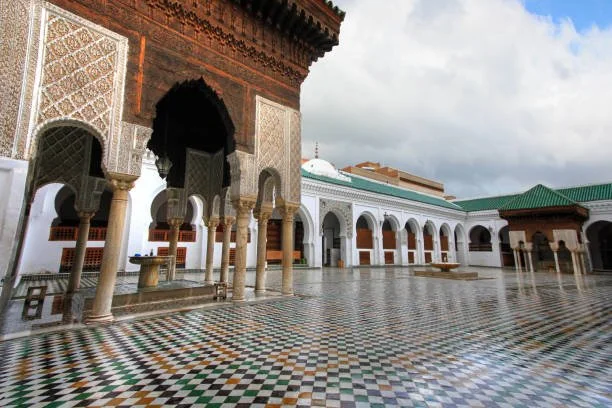
Karaouiyne Mosque and University
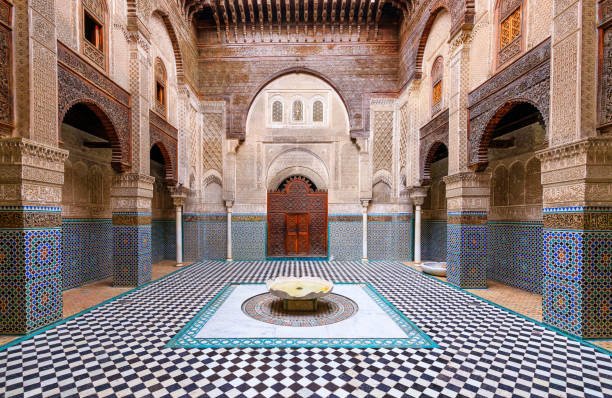
Medersa Ben Youssef